Running, from a single photo
One still frame. Fewer metrics than a clip -- no cadence, no contact time -- and the report says which ones are missing rather than estimating them.
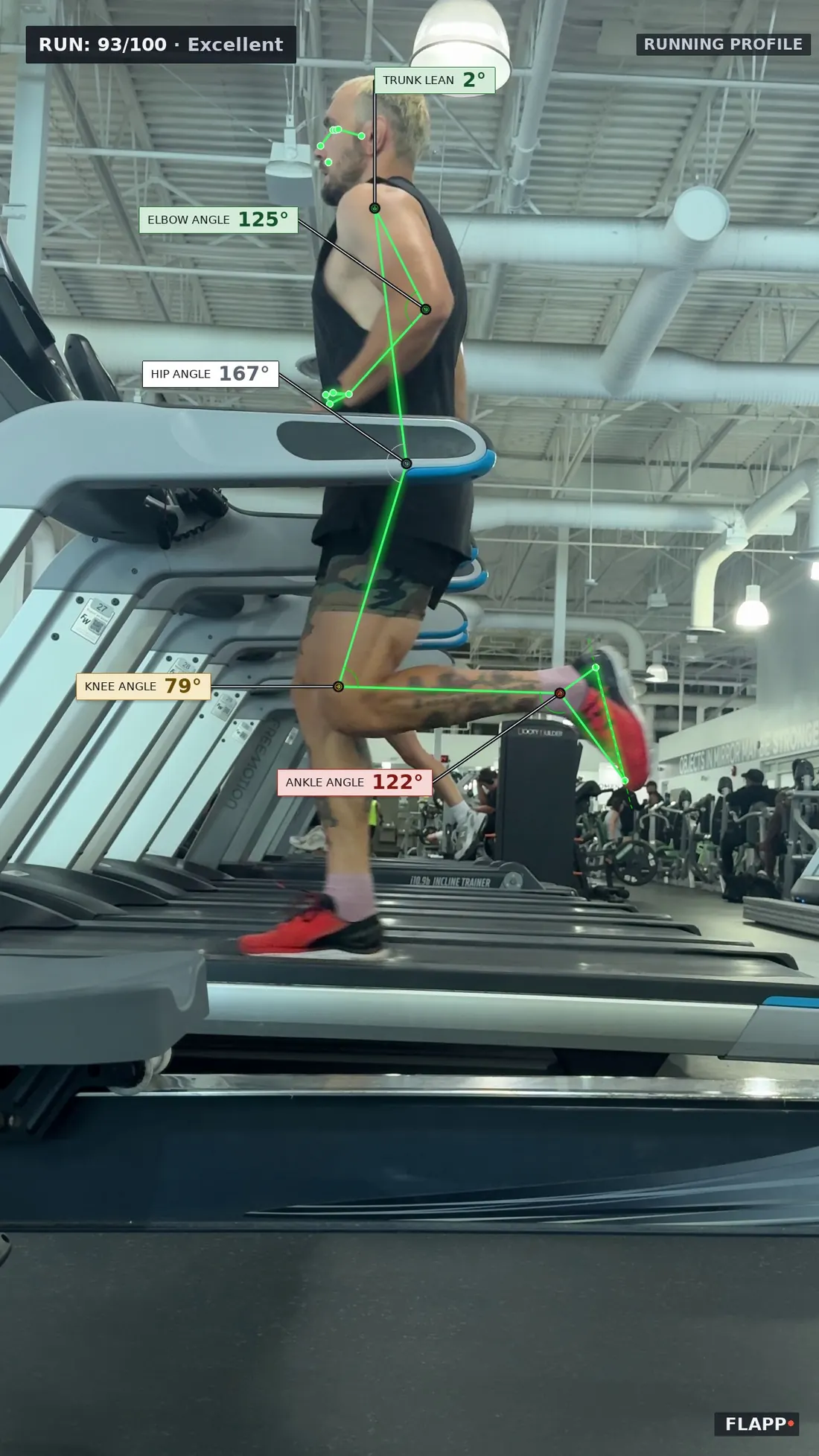
Measured against published ranges
Every target names where it comes from. A value just past the edge of a band is inside the method’s own error, so it is marked borderline rather than as a finding.
- Reference range
- Out of range
- Borderline
- In range
| Measurement | Yours | Vs reference | Status |
|---|---|---|---|
| Needs attention · 2 | |||
| Ankle Angle | 122.3° | 65–115° | Too high+7.3° |
| Knee Angle | 79° | 80–175° | Borderline−1° |
| In range · 2 | |||
| Elbow Angle | 125.2° | 70–135° | In range |
| Trunk Lean | 2.1° | −2 to 10° | In range |
Findings
- Ankle Angle — 122.3°, against a reference of 65–115°
Just outside, and inside the method’s own error rather than a finding: Knee Angle — 79° against 80–175°.
Measured but not scored, because the frame cannot answer it: Hip Angle — 166.9°. Thigh is under the body, where the hip reads ~180° whatever you do. Use a frame at footstrike or at toe-off for a hip verdict.
Measured from a single side-on camera with 2D pose estimation. Only the near side of the body is measured; the far side is absent rather than assumed symmetrical. Reference ranges are efficiency targets from the literature, not diagnoses.
Film ten seconds and get your own
Side-on, phone upright, you filling the frame. Free account, no card.
Analyze your form — free